Speed enforcement on roads: Ukrainian drivers reminded of camera and TruCAM detection ranges
Patrol police have clarified the distances at which speed cameras and laser devices operate, warning against sudden braking.
 🏙️City
Photo: TSN
Key points
- No single fixed distance exists for all cameras
- TruCAM laser devices operate up to 1,200 meters
- Abrupt braking creates risks for trailing cars
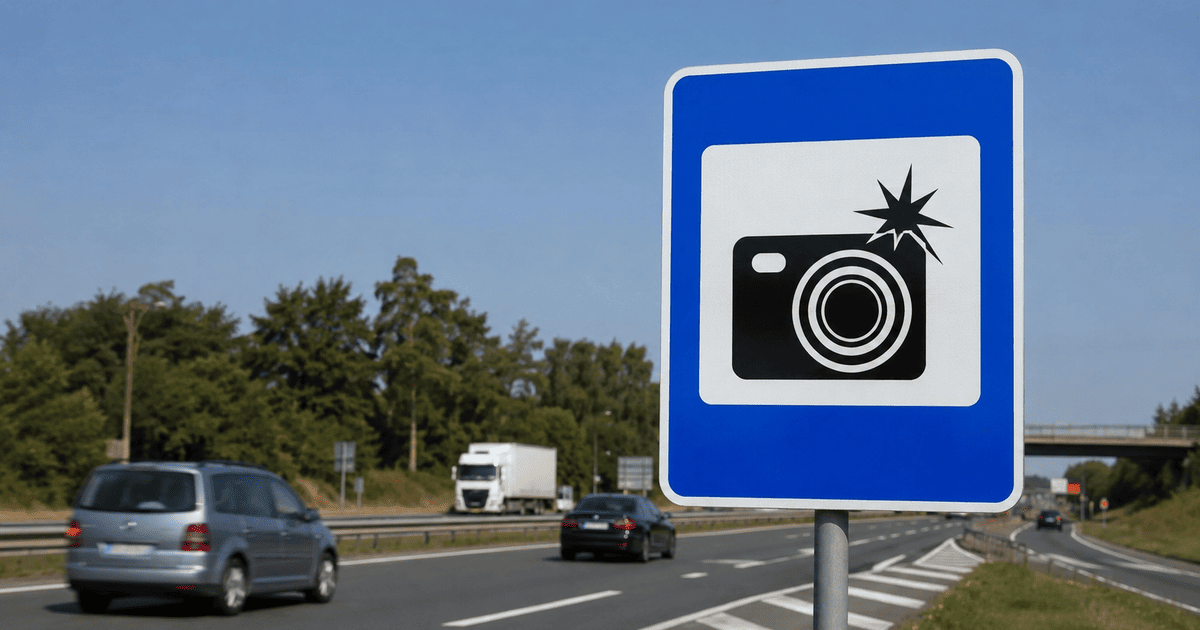
Drivers frequently attempt to calculate the exact distance at which traffic cameras begin recording speeding violations, yet no universal standard exists for all devices. Experts emphasize that stationary systems and handheld laser meters function differently, making it impossible to reliably guess the moment of enforcement. This issue remains vital for maintaining road safety across regional routes and areas near local communities.
Technical capabilities of speed enforcement tools
According to the Patrol Police of Ukraine, stationary automated enforcement systems monitor designated road sections, with their effective operational range depending entirely on the specific model and settings. Meanwhile, portable TruCAM laser meters utilized by inspectors possess a significantly greater technical range, capable of measuring vehicle speeds at distances of up to 1,200 meters. While this represents the maximum technical limit rather than a guarantee for every reading, actual distance depends on environmental conditions and operator use.
Authorities strongly advise against relying on last-minute braking upon spotting a camera or warning sign. The device may have already recorded the violation before a driver notices it. Furthermore, abrupt deceleration creates immediate hazards for trailing vehicles on the road.
Road safety implications for Vynnyky residents
For residents of Vynnyky and motorists navigating local infrastructure daily, this clarification serves as a practical reminder to maintain consistent speed limits throughout their journeys. Regional roads demand continuous attention, as sudden maneuvers or attempts to bypass enforcement systems through emergency braking risk causing collisions. The safest approach remains steady adherence to established speed limits across all road sections rather than localized slowing down.
Source TSN — tsn.ua/other/z-iakoyi-vidstani-fiksuyetsia-shvydkist-avtomobilia-tse-ne… ↗
Read next
 👥Society
Autumn Rose Care: Tips for Gardeners in Vynnyky
Experts explain why it is better to avoid radical pruning of roses until stable frost sets in.
 🇺🇦Ukraine
Estonia supports Ukraine's right to self-defense following incident in the Gulf of Finland
Estonian Foreign Minister Margus Tsahkna stated that the strike on a Russian vessel is a consequence of Russian aggression, reaffirming Ukraine's right to defend itself.
 🛡️Security
Rescue workers pull elderly woman from rubble in Dymer: death toll rises
In Dymer, Kyiv region, search operations continue after a drone strike on a residential building. Rescuers saved an 89-year-old woman, but the death toll has risen to nin…
 🚨Events
Russian corvette 'Merkury' reportedly damaged by Ukrainian drones in Libya
An explosion occurred on board a Russian warship in Benghazi, potentially caused by a maritime drone attack.
 🏛️Politics
Russia tests NATO defense algorithms: expert assessment
Retired Ukrainian Colonel Dmytro Kashchenko stated that airspace violations by Russia are a systematic attempt to identify weaknesses in NATO's defense.
 💡Tech
Scientists revive 40,000-year-old bacteria: climate risks of permafrost thaw
Researchers from the University of Colorado have found that ancient microorganisms from permafrost can reactivate and reproduce under warmer conditions.